
Is drip edge only for water?
Water is the original job. Covering the builder's gap is why it also keeps animals out of the attic. One piece of metal, two problems.
Drip edge is a metal flashing that sheds water. From a wildlife point of view, it is also the lid on a gap the builder left behind the gutter.
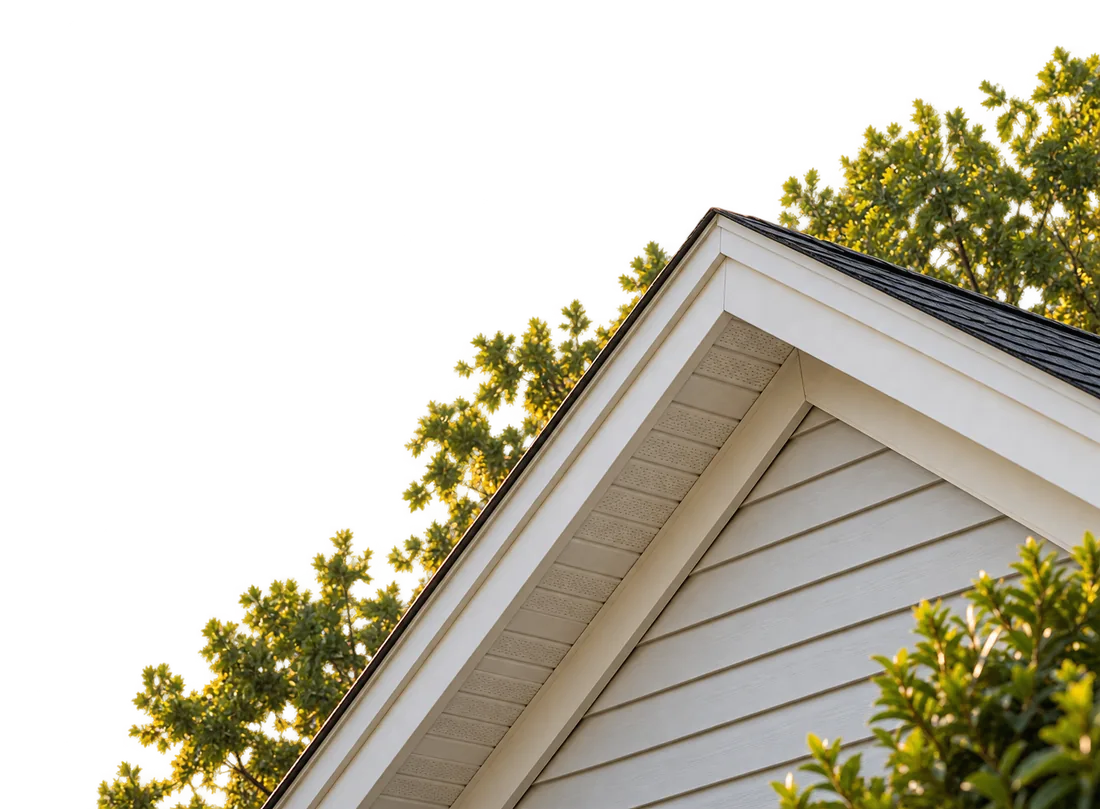
Where the roof deck meets the fascia, framing and materials rarely land in a perfect seal. That leftover slot is the builder's gap. It is normal. It is also a direct path into the attic if nothing covers it.
Drip edge is the metal piece that should bridge that joint and kick water away from the fascia. If it was never installed, or it was installed short, the gap sits in the dark behind the gutter, where you will not see it from the yard.
Roof edges are elevated, warm, and away from most predators. An animal walking the gutter line does not have to invent an entrance. The opening is already there. Attics stay dry, hold a fairly steady temperature, and are full of insulation for nesting. That combination is why attics are among the most common rooms wildlife occupies in a house.
Squirrels, raccoons, bats, mice, and birds all test rooflines. Bats and mice need very little width. A raccoon will enlarge a soft edge if the first attempt is tight.
Installed correctly, drip edge covers the builder's gap with a continuous metal flange between the deck and the fascia. Animals cannot chew through it the way they chew a wood rake board or a vinyl corner. It is a passive barrier. It does not depend on someone noticing a noise.
It is also still a water detail. Wildlife protection is the second job, not a replacement for kicking water off the roof deck. Both jobs want the same piece of metal.
No. A missing drip edge is an open invitation while the house is quiet. People usually discover it after scratching, a smell, soiled insulation, or chewed wiring. By then something has already moved in, and the cleanup is a separate conversation from the flashing.
If the roof is being replaced, this is the cheap moment to get the edge right. If animals are already inside, the gap gets closed after they are out, not before.
Newer Fort Wayne-area roofs and older ones both show up without drip edge, or with a piece that stops short of the corner. We look behind the gutter line on an exclusion visit, not only at the vent you noticed.
The builder's gap is a construction detail, not a regional species. Central Ohio roofs miss drip edge the same way.
Water is the original job. Covering the builder's gap is why it also keeps animals out of the attic. One piece of metal, two problems.
Not in any practical sense. That is the point. Wood fascia and vinyl trim are what they damage. Metal is the barrier.
Only if drip edge was actually installed along the eaves and rakes, including the corners. A new shingle does not fill the slot between the deck and the fascia by itself.
Yes, if it is missing. The gap does not wait for a reputation. It is easier to flash an empty attic than to clean one.