
If I do not see animals, why spend the money?
The gaps do not appear when the animal does. They are construction joints, worn vents, and missing flashing. Sealing them is how you avoid paying for removal, cleanup, and the same seal-up later.
Because the gaps are already there, and the invoice after a family of raccoons is larger than the invoice before. A seal-up is maintenance, closer to a roof repair than to an emergency.
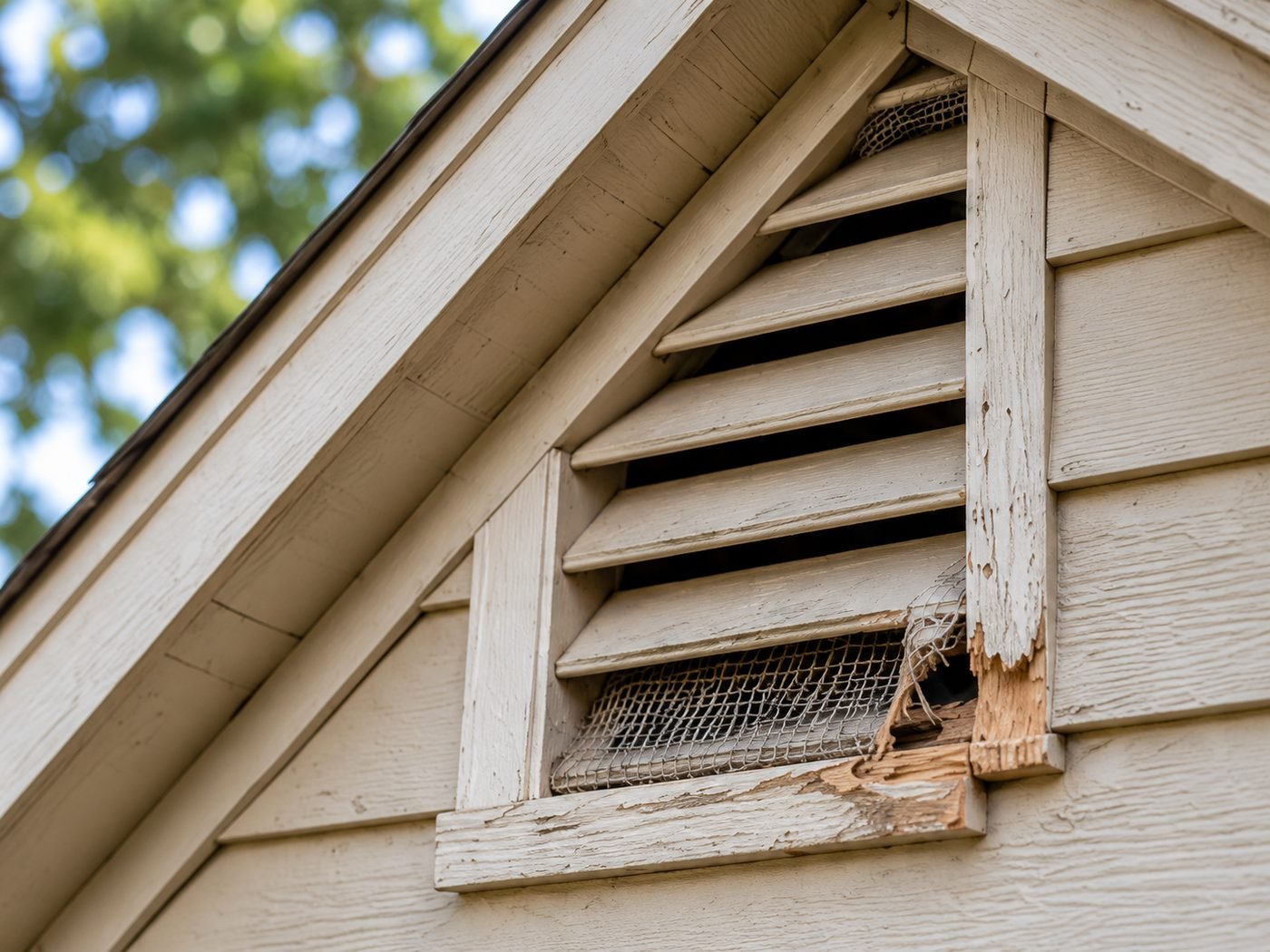
Warmth, cover from predators, and a path toward food. A house provides all three without meaning to. Small gaps at soffits, roof intersections, attic vents, chimneys, and where utilities enter are enough. Animals that succeed come back. If they have young inside, the job stops being a one-night noise and becomes a calendar problem.
They gnaw wood, insulation, and electrical wiring. Exposed conductors and nesting debris are how a wildlife issue becomes a fire issue. Nesting compresses insulation, so the heating bill moves. Moisture from urine and feces softens wood and feeds mold. None of this requires a dramatic hole on day one. It requires time.
Rabies is the headline, and it is a real concern with raccoons, skunks, and bats. Histoplasmosis is tied to fungal growth in accumulated bat or bird droppings. Leptospirosis and salmonella show up with rodent and wildlife urine and feces. Attic and crawl-space air is the exposure, especially for children, older adults, and anyone with a weaker immune system. Closing the access before an animal moves in skips that pile of material.
Because you are paying for something you cannot see, and the work touches parts of the house you do not look at. That discomfort is real. It is also the same discomfort as insurance. After animals are in, the list grows: get them out without trapping babies, clean what they soiled, repair what they chewed, and only then seal. Doing the seal first avoids most of the lethal-control pressure and the repeat visits.
A seal-up is not a promise that a raccoon will never walk your fence. It is a defined boundary. The openings that work like doors get closed with metal and proper covers. Foam as the only layer is not that boundary.
For Fort Wayne and the towns around it, a seal-up is the exclusion visit: roofline and ground level, metal where something can chew, and no sealing of bats while pups are flightless. Indiana DNR timing still governs bat work. We will say which openings your house has before anyone starts.
The building science does not change in Central Ohio. Bat timing and asbestos rules, if an attic is opened, follow Ohio law instead of Indiana's.
The gaps do not appear when the animal does. They are construction joints, worn vents, and missing flashing. Sealing them is how you avoid paying for removal, cleanup, and the same seal-up later.
No. It means the openings an animal can use or enlarge. A bat needs about 3/8 inch. A mouse needs about 1/4 inch. A raccoon will widen a soft soffit. The inspection makes the list.
Yes, when nothing is inside yet. You are not separating a mother from young, and you are not leaving an animal to die in a wall. If animals are already in, they have to leave before the last opening is closed.
Foam is a seal next to a repair. It is not the repair. Squirrels, raccoons, and mice remove it. Metal, hardware cloth, chimney caps, and a proper ridge guard are the materials that hold.