Vents and soffits
Gable vents, roof vents, and the seams under the eaves. A torn screen is an invitation with good airflow.
Wildlife help
Wildlife exclusion is a plain idea. The animal leaves, and the opening gets closed with something it cannot chew through. Skip that second part and you are running a short-term rental.
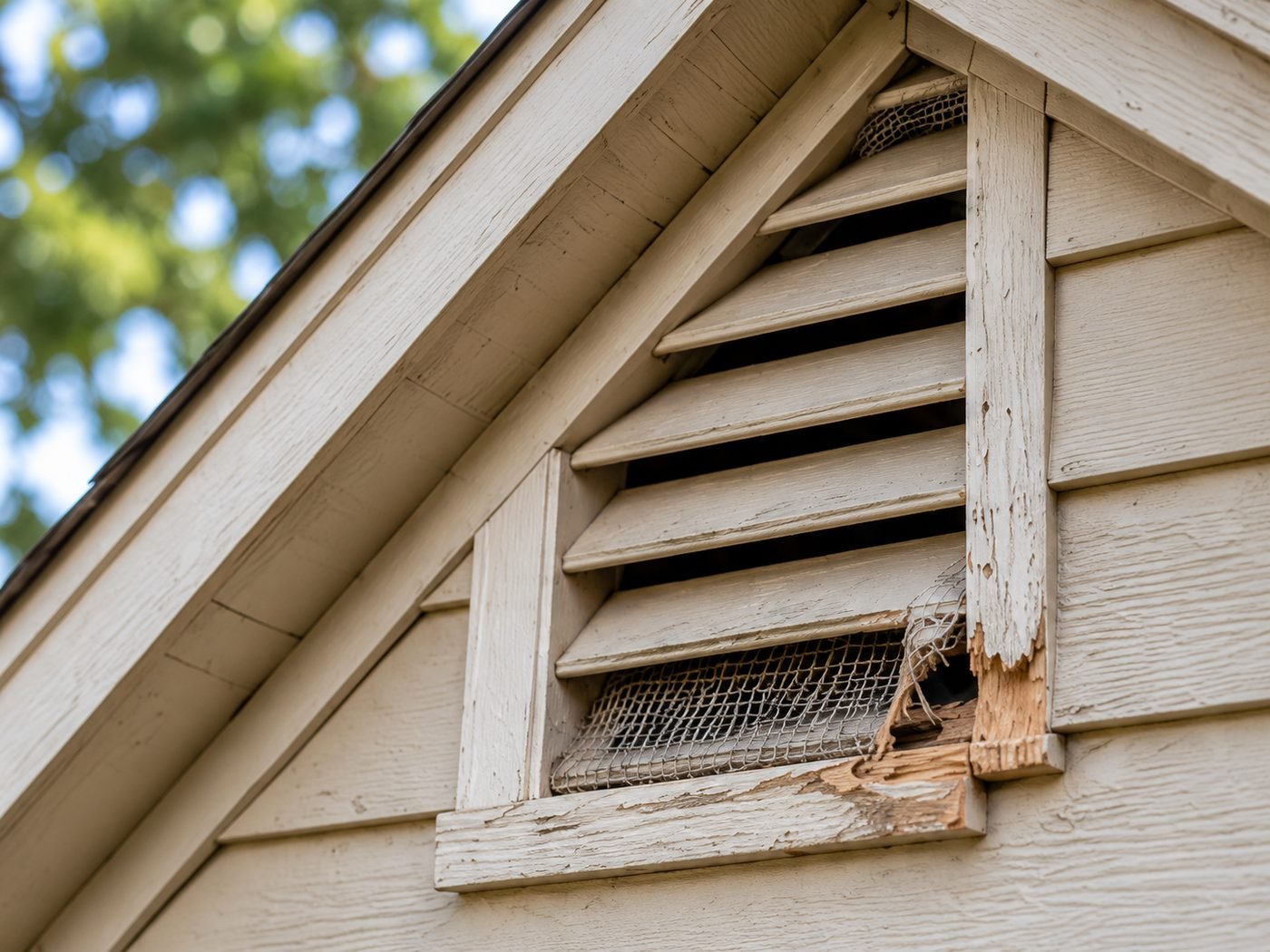
Gable vents, roof vents, and the seams under the eaves. A torn screen is an invitation with good airflow.
Where a gap meets a warm attic. Chimney caps matter, and so does the fascia that has pulled away.
Deck skirts, crawl-space doors, shed floors, and the corner where a utility line enters. Not every guest climbs.
A can of spray foam feels like a solution because it fills the gap and looks finished. Squirrels, raccoons, and mice treat it like a craft project. We use foam as a seal beside a metal repair, not as the repair itself.
Where teeth are involved, the outside layer should be metal. Hardware cloth, a proper vent cover, flashing, a chimney cap. The material matches the hole and the animal. A pretty patch that fails in a month is not the cheaper one.
Animals are picky and also not picky. If one gap worked, the next gap might work next week. We walk the roofline and the ground-level openings, not just the spot you noticed. You will hear what we found in normal words.
A one-way door is useful when a single animal can leave and nothing young is stuck inside. It is the wrong tool for babies in a nest, and it is the wrong tool for bats while pups are flightless. Summer bat work waits. We would rather tell you that on the visit than discover it after a seal.
Some birds in vents and chimneys are just starlings or sparrows being rude. Others, including chimney swifts, are protected while they nest. We do not cap a chimney that still has a family in it and hope the problem solves itself.
If you hear fluttering in the flue in summer, say so. Timing matters there the same way it matters with bats. The cap goes on after the nest is done, not before.
Not if the hole stays open. Removal and exclusion solve different parts. We will tell you which ones your house needs, and you can decide how far to go. Leaving the door open is how people meet the same kind of animal twice.
No. We close the ones an animal can use, and the weak spots they are about to make bigger. A bat fits through a thumb-wide gap. A mouse needs less. A raccoon will widen a soft soffit. The inspection builds the list.
Tell us what you've noticed. We'll help you take the next step.
Call for helpWe'll contact you about your request.