
A shed skin
Papery, translucent, and shaped like the animal that left it. Attics, barns, and garage corners are the usual spots.
Gray ratsnakes climb. Joists, vents, and wall gaps are all fair game, especially if mice moved in first. You do not have to be brave. You do have to leave it alone.
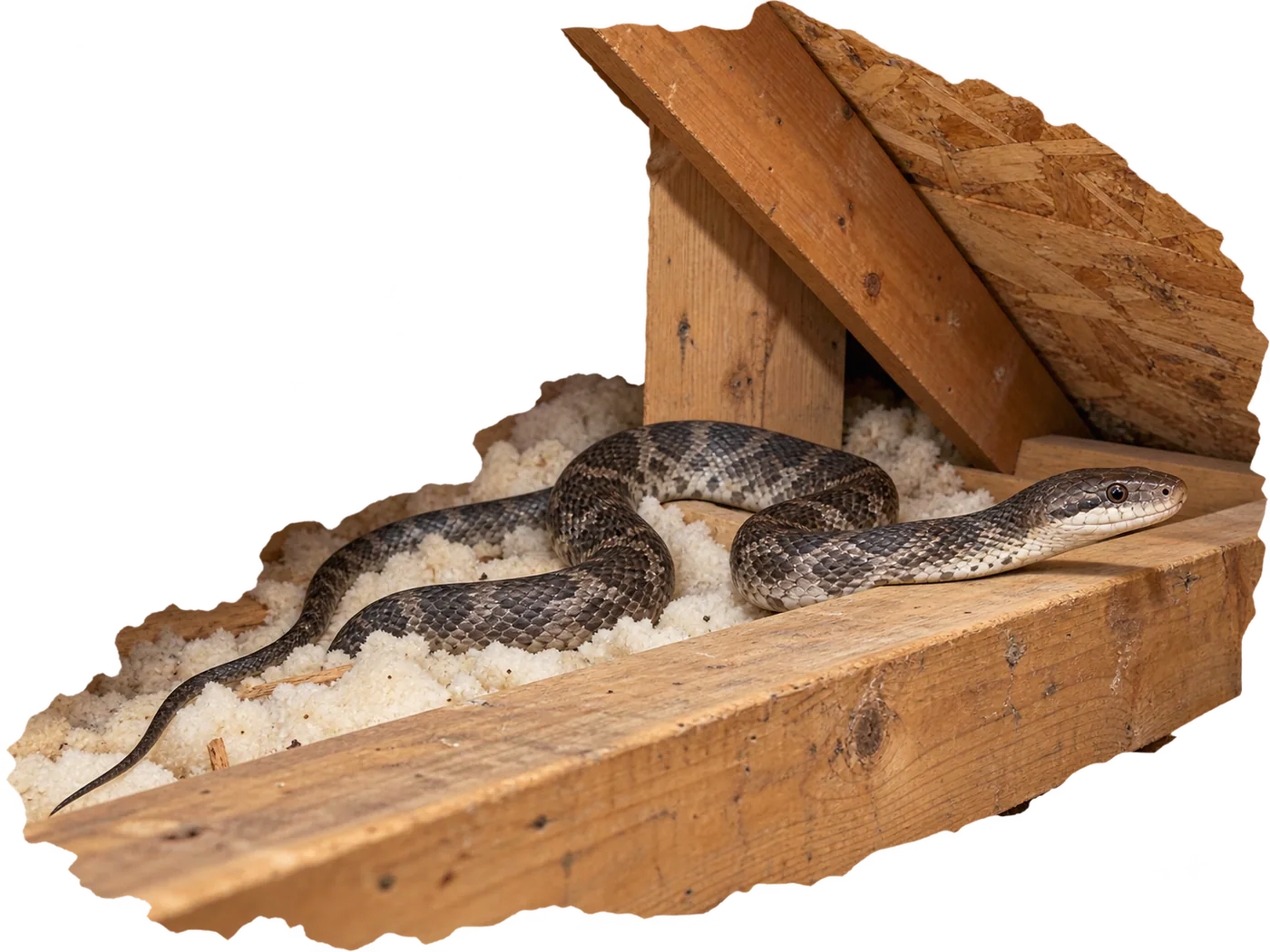
Papery, translucent, and shaped like the animal that left it. Attics, barns, and garage corners are the usual spots.
Snakes do not walk the ceiling like raccoons. People find one on a joist, along a foundation, or coiled in a quiet garage.
Droppings, chewed storage, or a pet staring at a wall. A ratsnake goes where the meal is.
The snake in a Columbus attic is usually a gray ratsnake, sometimes still called a black ratsnake. They are nonvenomous, they climb well, and an attic does not bother them if it smells like mice.
Ohio has three venomous species: the copperhead, the eastern massasauga, and the timber rattlesnake. Copperheads and timber rattlesnakes belong to the unglaciated southeast, not to Franklin County attics. Massasaugas are rare and tied to wetlands, not rafters. Still, do not pick a snake up to check the pattern. A photo from across the room is enough.
If a snake settled in, food settled in first. That might be mice in the garage or a nest in the insulation. Taking the snake and leaving the mice is how you get another one.
We look for the animal, the opening, and the reason it stayed. Sometimes the gap is at the foundation. Sometimes it climbed a wall cavity all the way to the attic. Both can be closed once we see them.
If a snake is in a room you need today, shut that door if you can do it without stepping over the animal. Keep pets out. Do not pin it with a broom, and do not bag it if you are unsure.
Tell us the room, about how long it looked, and whether you have also had mice. A blurry photo from a safe distance is better than a close call.
In the Columbus area, a snake in the attic is usually a gray ratsnake, and they are not venomous. Ohio's venomous species are uncommon here and are not the ones pacing the rafters. Leave the identification to someone who does not have to hold it.
It might, if the mice and the gap are still there. We remove the snake you have and talk through closing the opening and dealing with whatever it was eating.
The longer explanation, with sources, is in the guide Snakes in the house.
Tell us what you're hearing and when. You don't have to know what it is.
Call for helpWe'll contact you about your request.