
Why is it only loud in the morning?
Tree squirrels are daytime animals. Scratching at sunrise fits them. If the noise starts after the lights go out, say so. It may be a flying squirrel, or it may be mice.
They want a dry nest and a place to store food. A branch over the roof is a sidewalk. Wood is not a repair they respect.
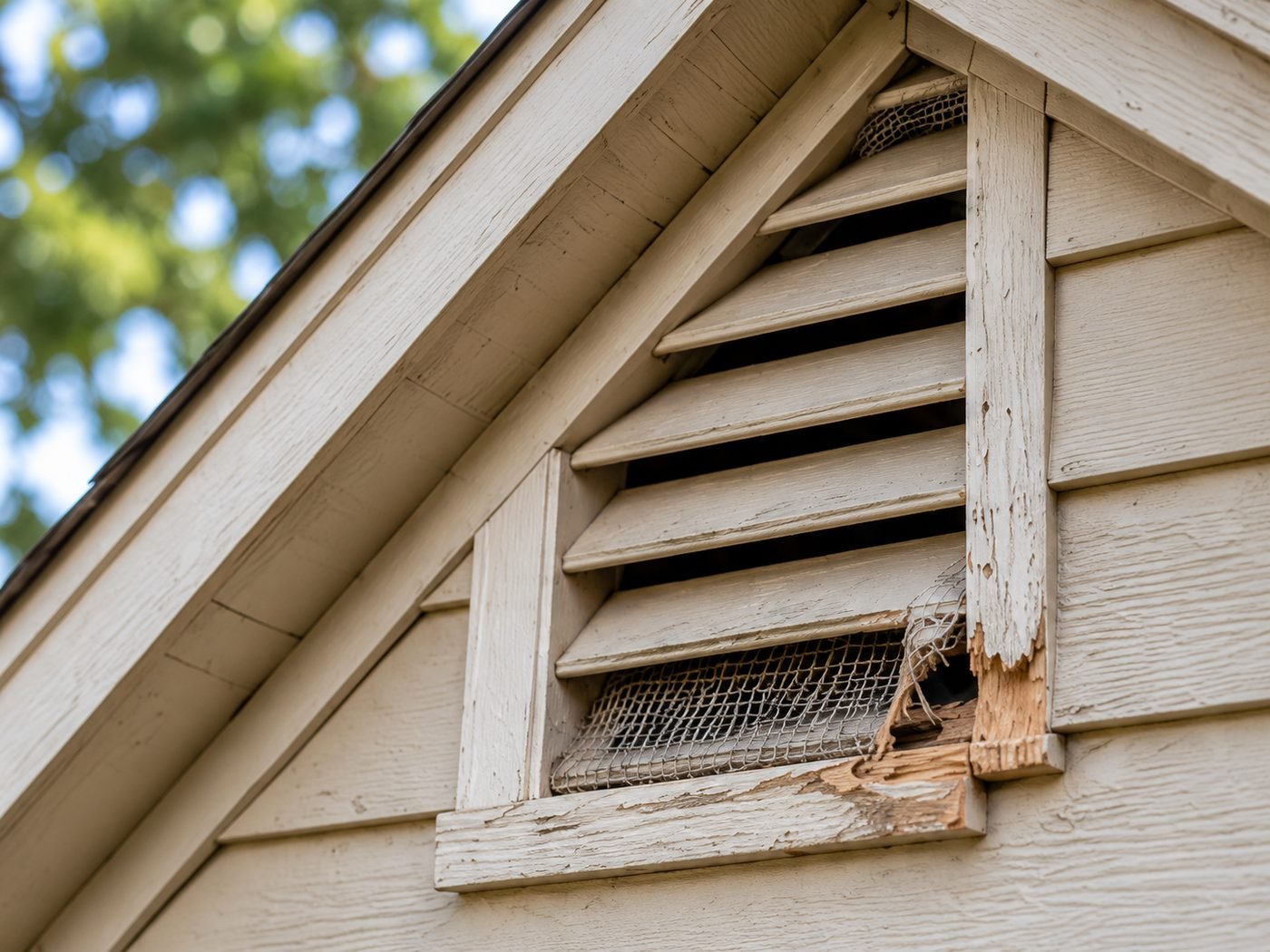
Squirrels climb well, and a limb that reaches the roof might as well be a ramp. From there they test roof vents, soffits, chimneys, and the seams where fascia meets the roof. An opening around 1.5 to 2 inches is enough. If they have used it once, they will use it again next season unless it is actually closed.
Daytime scratching, especially at dawn, fits gray squirrels and fox squirrels. Night scurrying can be flying squirrels or mice. The time of day is the useful clue. You do not have to name the species first.
Squirrel incisors grow for life and have to be worn down. In an attic that means wood, plastic, insulation, and wiring. When the plastic coating comes off a wire, a short can start a fire. Gnawing on fascia and beams weakens them over time. Droppings and urine sit in the insulation, and fleas, ticks, or lice can come along.
That is a practical reason to deal with it, not a scare line. The person in the attic should look at what has been chewed and say so in plain words.
Wood is what they chew. A board over a gap looks finished and becomes the same hole after a few nights. Galvanized hardware cloth, metal flashing, and a real vent cover stand up to teeth. Foam alone does not.
Trimming the branch helps. It does not close the hole they already know. Both steps belong in the same plan.
A one-way door, a flap or funnel that opens outward, lets the squirrel leave and stops it from coming back. It only works if every other opening is sealed first. Otherwise they re-enter next door and the device did nothing.
It is the wrong tool if young squirrels are still in the nest and cannot leave. After the animals are out, the device comes off and that last opening is sealed for good.
Fort Wayne streets with older maples and oaks see this every fall, when squirrels settle in, and again in late winter when babies show up. Gray squirrels and fox squirrels are both common. A nest with young means the hole stays open until they can leave.
The same roofline gaps and tree bridges show up on Central Ohio houses. The repair is still metal, and it still waits if babies are in the nest.
Tree squirrels are daytime animals. Scratching at sunrise fits them. If the noise starts after the lights go out, say so. It may be a flying squirrel, or it may be mice.
It removes the bridge. It does not close the hole. Both matter: get the animal out, close the opening with metal, and deal with the limb that worked like a ramp.
Plywood is a snack they already know how to eat. Use galvanized steel mesh, hardware cloth, or metal flashing where they chew.
They can, if the young cannot leave yet. Other openings also have to be sealed or the adult simply uses a second door. Check for a nest before anything is closed.